
Why in news?
- In a significant achievement for responsible space exploration, ISRO’s recent PSLV-C58/XPoSat mission achieved near-zero debris in Earth’s orbit.
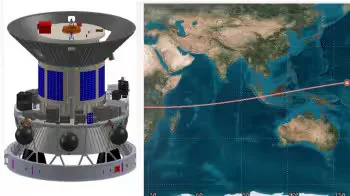
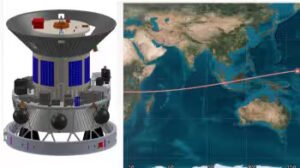
- This accomplishment was made possible by converting the final stage of the rocket into the PSLV Orbital Experimental Module-3 (POEM-3).
- Instead of lingering in orbit as space junk, POEM-3 was designed to safely re-enter the atmosphere after completing its mission.
- This innovative approach highlights the growing concern over space debris and the international efforts underway to tackle this critical issue.
What is POEM?
- POEM stands for PSLV Orbital Experimental Module. It’s an innovative concept developed by the Vikram Sarabhai Space Centre (VSSC) that transforms the fourth stage of a Polar Satellite Launch Vehicle (PSLV) rocket into a functional platform after it deploys its payload.
- This platform can then be used for scientific experiments in space.
- The inaugural use of POEM occurred in June 2022 with the PSLV-C53 mission. Traditionally, this rocket stage would become space debris after completing its task.
- POEM breathes new life into these stages, utilizing them for scientific purposes while minimizing the creation of space junk.
The Problem of Space Debris
- Low Earth Orbit (LEO), the region between 100 km and 2,000 km above Earth’s surface, is becoming increasingly crowded with space debris.
- This debris includes defunct satellites, rocket parts, and fragments from collisions. These objects travel at high speeds, up to 27,000 kilometers per hour, and pose a significant risk to operational spacecraft.
- Collisions with debris can create even more debris in a cascading effect known as Kessler syndrome.
- This creates unusable regions in orbit and jeopardizes future space activities.
- The situation is further compounded by the rising number of launches by private space agencies.
POEM-3: A Step Towards a Solution
- ISRO’s PSLV-C58 mission in January 2024 marked another successful deployment of POEM technology. After delivering the XpoSat satellite, the fourth stage was transformed into POEM-3.
- Unlike traditional missions where the stage would remain in orbit, POEM-3 was maneuvered to a lower orbit (around 350 km) where it will eventually burn up harmlessly in the atmosphere.
- This demonstrates a responsible approach to space exploration and reduces the overall space debris burden.
The Global Effort to Combat Space Debris
- India is not alone in its fight against space debris. Here’s a glimpse into international efforts:
- Japan:
- The Commercial Removal of Debris Demonstration (CRD2) project aims to tackle space junk using innovative technologies.
- Europe:
- The European Space Agency (ESA) has adopted a ‘Zero Debris’ charter, promoting methods to minimize debris creation.
- USA:
- NASA’s Orbital Debris Program, established in 1979, focuses on minimizing debris generation and tracking existing debris.
- The US Space Force also plays a role in monitoring space debris and potential collisions.
- Japan:
The Road Ahead
- International collaboration is crucial in establishing a comprehensive space traffic management system.
- This system would track debris, predict collision risks, and enable active satellites to perform evasive maneuvers.
- Additionally, advancements in space-based recycling and repurposing debris, along with the development of robotic arms for debris capture, hold immense promise for a cleaner and more sustainable space future.
- POEM-3 is a testament to India’s commitment to responsible space exploration.
- By adopting similar practices and fostering international collaboration, we can ensure a future where space exploration thrives in a safe and sustainable environment.
People also ask
Q1: What is POEM?
Ans: POEM stands for PSLV Orbital Experimental Module. It’s a platform created by ISRO by repurposing the fourth stage of a Polar Satellite Launch Vehicle (PSLV) rocket after it deploys its payload. This platform can then be used for scientific experiments in space.
Q2: What was the significance of the recent POEM-3 mission?
Ans: The POEM-3 mission, launched in January 2024, marked a successful application of POEM technology. Unlike traditional missions where the rocket stage would become space debris, POEM-3 was maneuvered to a lower orbit where it will eventually burn up in the atmosphere. This significantly reduces the amount of space debris created by the mission.
Q3: What is space debris and why is it a problem?
Ans: Space debris refers to defunct satellites, rocket parts, and fragments from collisions orbiting Earth, primarily in Low Earth Orbit (LEO). These objects travel at extremely high speeds and pose a threat to operational spacecraft. Collisions with debris can create even more debris in a cascading effect, jeopardizing future space activities.
Thank you for your sharing. I am worried that I lack creative ideas. It is your article that makes me full of hope. Thank you. But, I have a question, can you help me?
I don’t think the title of your article matches the content lol. Just kidding, mainly because I had some doubts after reading the article.